
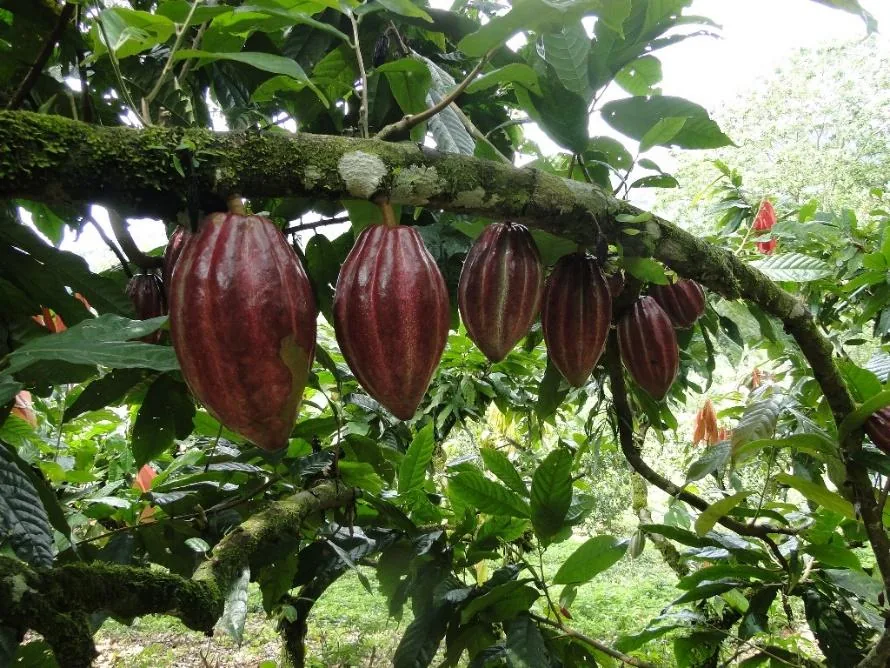
Ceremonial cacao is the whole cacao bean, fermented, gently processed and ground with all of its natural fat (the cacao butter) left in. Nothing is pressed out and nothing is added. The result is a rich, earthy drink that is far closer to what people across Mesoamerica drank for thousands of years than to anything sold today as hot chocolate.
Is “ceremonial grade” an official standard?
No. There is no legal or industry definition of “ceremonial grade,” so the term is used loosely, and some brands apply it to ordinary cacao. That's why it helps to know what to look for. When we call our cacao ceremonial, we mean four specific things:
- Whole and full-fat. The cacao butter stays in. It gives the drink its body, carries the bean's full flavor, and is what separates ceremonial cacao from cocoa powder.
- One ingredient. 100% cacao. No sugar, milk powder, fillers or flavorings.
- Heirloom beans from small farms. Older cacao varieties, grown by families who know their trees, rather than high-yield commodity beans bred for volume.
- Gentle, small-batch processing. Our cacao is stone-ground in small batches, then pulverized into granules so it's easy to scoop and quick to dissolve.
How ceremonial cacao is made
Every bar of chocolate and every bag of cocoa starts with the same fruit: the cacao pod, which grows directly from the trunk of the Theobroma cacao tree. What happens next decides what you end up with.
- Harvest. Ripe pods are cut by hand and opened to reveal seeds wrapped in sweet white pulp.
- Fermentation. The seeds and pulp ferment for several days. This step develops the chocolate flavor; unfermented cacao tastes flat and astringent.
- Drying. The beans dry in the sun until they're stable enough to store.
- Roasting and peeling. A gentle roast deepens flavor and loosens the papery shell, which is then removed, leaving the nib.
- Grinding. The nibs are ground. Because they're roughly half fat, they melt into a thick paste. For ceremonial cacao, this is where the process stops: nothing is pressed out.
Cocoa powder takes one more step: the paste is pressed under high pressure to squeeze out most of the cacao butter, and the dry cake left behind is milled into powder. That's the difference in a single sentence. See the full comparison of ceremonial cacao, cacao powder and cocoa.
Why Mana Cacao is pulverized, not a block
Traditional ceremonial cacao is usually sold as a solid block or disc that you chop or shave with a knife before every cup. It works, but it's slow and hard to measure. We take our stone-ground, full-fat cacao one step further and pulverize it into small granules. The cacao butter is still all there; it's just ready to scoop with a spoon and melt into hot liquid in seconds.
What ceremonial cacao tastes like
If you're expecting hot chocolate, the first sip can be a surprise. Ceremonial cacao is unsweetened, so it's deep, earthy and pleasantly bitter, with a creamy body from the natural fat. Depending on the beans, you may notice fruity, nutty or floral notes. Most people add a little honey or maple and a pinch of spice. Here's our recipe.
Why is it called “ceremonial”?
The name points to how cacao has been used for millennia: as a drink shared with intention, at weddings, rituals and gatherings. Today people drink it as a calm morning ritual, before meditation, yoga or breathwork, or together in a cacao ceremony. You don't need a ceremony to enjoy it, but it rewards a little attention. Read about cacao's long history.
How to tell good ceremonial cacao from bad
- Check the ingredients. It should say one thing: cacao.
- Check the fat. Real ceremonial cacao is full-fat. If the nutrition label shows very little fat, it's been defatted.
- Ask where it's from. Good producers can tell you the country, the region and ideally the farms.
- Look at the texture. Full-fat cacao feels slightly oily and clumps a little; defatted powder is dry and dusty.